To Save Money
Independent repairs cost much less than mandatory factory replacements.

Affordable repairs. Fair access to parts. Freedom to choose who repairs your electronics and mobile devices.
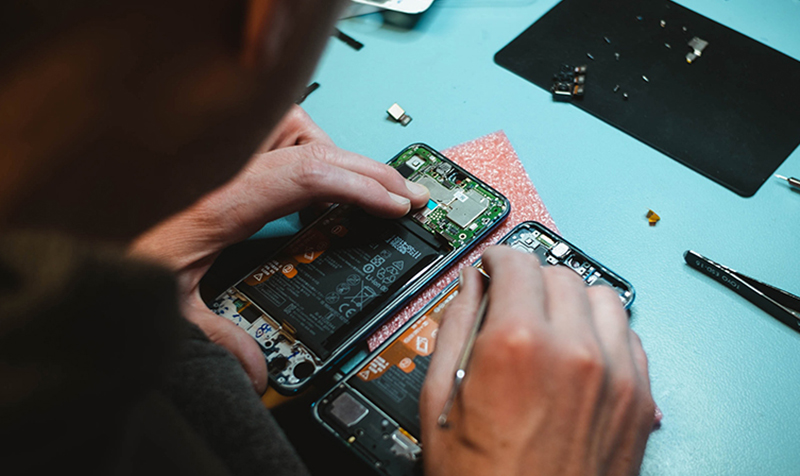
Keeping devices working gives consumers more choice and local repairers more opportunity.
Independent repairs cost much less than mandatory factory replacements.
For example, fixing a cracked screen keeps tons of toxic electronic waste out of local landfills.
Owners of electronic devices should have full control over the hardware they buy and own.
Genuine spare parts must be sold to everyone at fair market prices.
Service guides and diagnostic software must be public and free to use.
Manufacturers must stop blocking third-party screens and batteries with software updates.
In an increasingly digital South Africa, access to a working mobile device is no longer a luxury—it is an absolute prerequisite for economic survival, job seeking, education, security and banking, etc…. However, the current landscape governing consumer technology is defined by anti-competitive, exclusionary, and monopolistic practices.
Major global tech manufacturers enforce an artificial "pay and throw away" model that exploits South African consumers, damages our local environment, and actively suppresses the growth of independent SMMEs, previously disadvantaged individuals, the township and informal technical economies.
Building upon successful interventions made in the South African motor vehicle aftermarket sector, the Competition Commission issued in August 2026, equivalent legally binding draft guidelines for the consumer electronics and mobile device industry. The closing date for public comments is the 21st of September 2026.
Both PDFs open in a new tab.
Manufacturers systematically gatekeep spare parts, specialized diagnostic software, repair schematics and training. By keeping these resources proprietary, they create artificial monopolies that ensure independent repairers cannot compete fairly.
This format forces low-to-middle-income South Africans into predatory repair pricing or unnecessary upgrades they cannot afford.
It directly strangles the development of small, medium, and micro enterprises (SMMEs) in the repair sector—an industry uniquely capable of providing skilled, local jobs in urban, townships and rural communities alike.
South Africa produces between 360,000 and 530,000 tonnes of e-waste annually, yet less than 12% is formally processed. The rest pollutes our municipal landfills.
By intentionally designing devices that are difficult to repair and restricting the parts needed to extend their lifespans, manufacturers are driving up local environmental degradation.
The carbon footprint attached to shipping new replacement devices into South Africa accelerates global climate impacts while local soil and water lines bear the brunt of discarded toxic heavy metals.
Modern devices increasingly employ "software serialization" or parts-pairing. Even if an independent technician successfully swaps a broken screen or a degraded battery using an identical component, manufacturer software deliberately disables core features (such as biometric authentication, true-tone displays, or battery health metrics) or flashes persistent, penalizing warnings to the consumer. This is a bad-faith restriction on consumers personal property.
The Competition Commission will be able to institute an enforceable regulatory framework requiring all mobile electronics manufacturers operating within South Africa to adhere to the following principles:
Original equipment manufacturer (OEM) spare parts—including batteries, displays, cameras, and charging assemblies—must be made available to independent repair providers and consumers at fair, non-discriminatory wholesale pricing.
Service manuals, circuit schematics, diagnostic applications, and firmware tools required to perform safe repairs must be published openly online, free of charge.
The use of software updates, serial-number pairing, or digital locks intended to degrade device performance or disable features following an independent repair must be explicitly banned under local consumer protection rules.
Also known as "dark patterns" or deceptive design. These practices deliberately manipulate the user interface (UI) to exploit human psychology, forcing or tricking users into making decisions that benefit a business at their own financial or privacy expense.
A consumer's original manufacturer warranty must not be voided in its entirety simply because a non-safety-critical component was serviced or replaced by an independent third party.
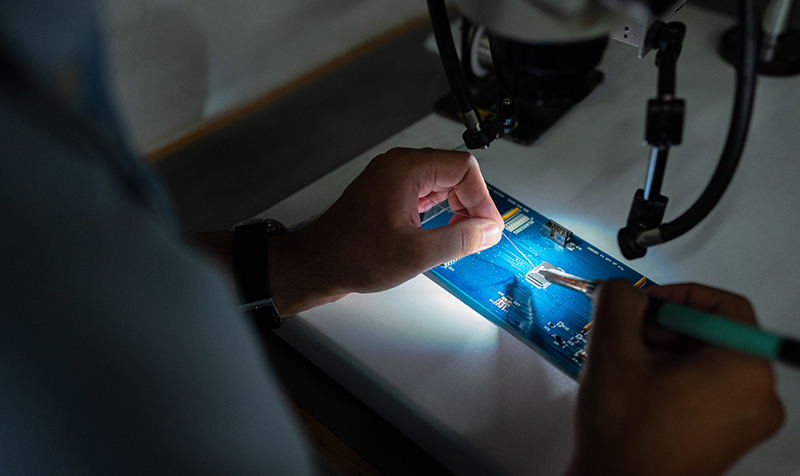
When a South African consumer purchases a mobile device, ownership must be absolute. True ownership dictates the freedom to choose how, where, and by whom that device is repaired. The country must rally behind the Competition Commission to continue championing consumer rights, support local tech entrepreneurs, and protect our environment by ending manufacturer repair monopolies.
Drawing from the motor electronics and mobile devices industry experience in South Africa, the following explanatory details can assist consumers, independent repairers and anyone interested in the electronics and mobile devices sector.
The Right to Repair (R2R) is an international trend on behalf of the many who care about the future of the planet and consumers aftermarket for electronics and mobile devices. There is a need for a fair and competitive regulatory environment that enables freedom of choice for the consumers and that gives aftermarket SMEs a chance to stay in business. The R2R aims at preventing situations that would deny consumers their right to have their goods and devices serviced, maintained and repaired at competitive prices from independent repairers of their choice. It also commits to safeguard independent aftermarket repairers ’ right to exist, serve and grow. Only strong, entrepreneurial competition will result in advantageous pricing for consumers and ensure that local businesses can continue to provide quality service in the neighbourhood and communities they serve and support.
The Right to Repair focuses on consumer choice and effective competition in the electronics and mobile devices aftermarket. It is based on the right of consumers in the choice of the aftermarket care of their electronics and mobile devices and the right of the independent repairers to maintain, service and repair increasingly made complex modern electronics and mobile devices.
The R2R aims to
improve the visibility and understanding of the independent electronics and mobile devices aftermarket;
ensure that the legal right of access to technical information, tools and equipment, parts and training is upheld;
promote a regulatory environment that effectively safeguards the interests of consumers and small and medium-sized companies in this sector;
uphold consumers ’ rights to have their electronics and mobile devices serviced, from day one, by an independent repairer of their choice.
Without full and fair access to technical information, replacement parts, training, multi-brand diagnostic tools and test equipment, the independent aftermarket repairers will be deprived of their right to service and repair electronics and mobile devices.
Independent repairers cannot fully trade, service their clients and the survival of the entire independent aftermarket value chain and pricing will continue to be controlled by OEMs. The right to repair will safeguard the consumer’s right to affordable and convenient aftermarket care for their electronics and mobile devices, from day one – including the statutory and any extended warranty period – and throughout their entire life cycle.
The R2R aims at maintaining effective and fair competition between independent aftermarket repairers and the electronics and mobile devices manufacturers’ service networks as it is the only way to guarantee the consumers’ freedom of choice of where to take their electronics and mobile devices for servicing or repair. Consumers should be able to choose what is done to their property and who executes the work on what is, after all, their own electronics and mobile devices.
This also means :
The right to determine who should have access to the technical data stored by the computerized on-board systems, and to determine how such data may be stored and used;
The right of consumers and independent repairers to learn of any defect that needs to be corrected, this is especially important in the context of electronics and mobile devices safety.
The right to have any quality part installed that meets all legal requirements, regardless of whether or not it was supplied by the electronics and mobile devices manufacturer;
Competition in the marketplace is good for consumers and good for business. Competition from many different companies and individuals through free enterprise and open markets is the basis of a healthy economy. When businesses compete with each other, consumers get the best possible prices, quantity, and quality of goods and services. Competition laws encourage companies to compete so that both consumers and businesses benefit. One important benefit of competition is a boost to innovation.
Competition among companies can spur the invention of new or better products, or more efficient processes. Businesses may race to be the first to market a new or different technology. Products that are commonplace today once were technological breakthroughs: cars, planes, phones, televisions, the personal computer, and modern medicines all show how innovation can change your life, and increase prosperity.
Competition can lead companies to invent lower-cost manufacturing processes, which can increase their profits and help them compete—and then, pass those savings on to the consumer. Competition also can help businesses identify consumers’ needs and then develop new products or services to meet them.
Crucially in the South African context, competitive markets are more accessible for smaller to medium enterprises and accordingly help to drive broad based economic growth, create jobs and allow for the upliftment of previously disadvantaged individuals.
A wide range of repairers constitutes the independent and multi-brand electronics and mobile devices aftermarket: Independent resellers, independent repairers, independent distributors, manufacturers of components and accessories, producers of diagnostic tools and equipment, inspection centres, training providers, etc….
It forms a true network of SMEs across South Africa, to the benefit of local and regional economies. As a consequence, failure to uphold effective competition in South Africa would considerably jeopardise the future and the potential development of business and local activities in every part of the country and even the region.
Competition and consumer rights relating to the right to repair in the South African electronics and mobile devices aftermarket are governed by the Competition Act 89 of 1998 and the Consumer Protection Act 68 of 2008.
In the future, these Guidelines for Competition in the South African Electronics and mobile devices Aftermarket will come into effect to guide and facilitate the enforcement of the Competition Act within the South African electronics and mobile devices aftermarket.
The Right to Repair Campaign gathers different categories of stakeholders having an interest in the creation of a competitive regulatory environment for the electronics and mobile devices aftermarket. It is supported by authorised and independent repairers, independent parts distributors, parts suppliers, producers of diagnostic tools, trade groups, and consumers groups. It is open to any who care about the future of the multi-brand electronics and mobile devices aftermarket, and its rightful claim for consumer choice and a competitive after-sales market.
Everytime I receive a broken phone I should run to jozi from Orlando east to buy LCD nor parts, which I apply the rule no deposit no repair due to financial constraints
The cost of parts is very high and which causes us technicians to buy them at that retail price and make small profit, we can't buy directly from manufacturer.
I run a small mobile phone repair business and often struggle to access quality parts at reasonable prices. In many cases, I have to rely on third-party suppliers, which can affect both cost and consistency. For certain brands, especially Apple devices, parts are either too expensive or difficult to obtain, which limits the services I can offer. These challenges affect my customers directly. Many of them are students who cannot afford high repair costs or new devices. When repairs become too expensive or delayed, they are left without essential tools for communication, learning, and work. Greater access to affordable parts, tools, and repair support would help small businesses grow, improve service quality, and make repairs more accessible for everyday people.
Latest comments from the campaign.